Sonic Seasoning: How Sound Design Shapes Taste in Hospitality
What we hear can influence how we perceive flavour. Chocolate Frequencies used a guided chocolate tasting to show why sound belongs in the hospitality design brief.
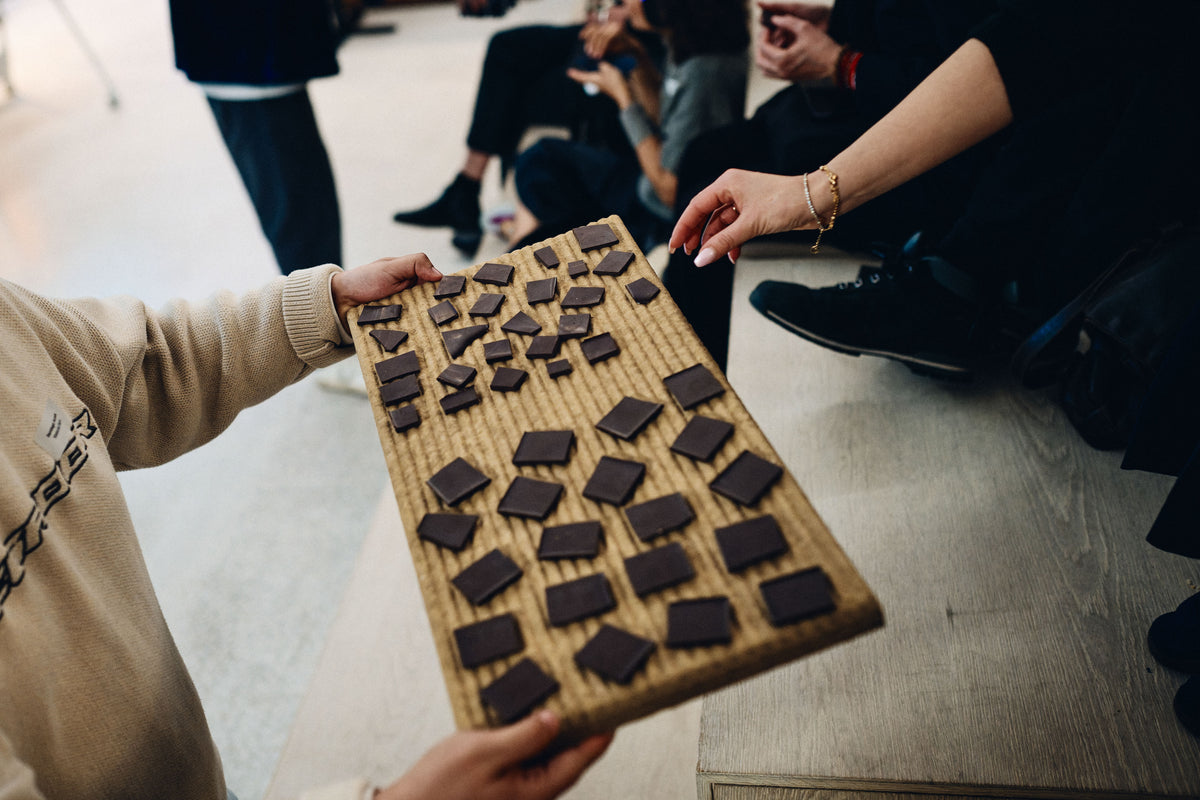
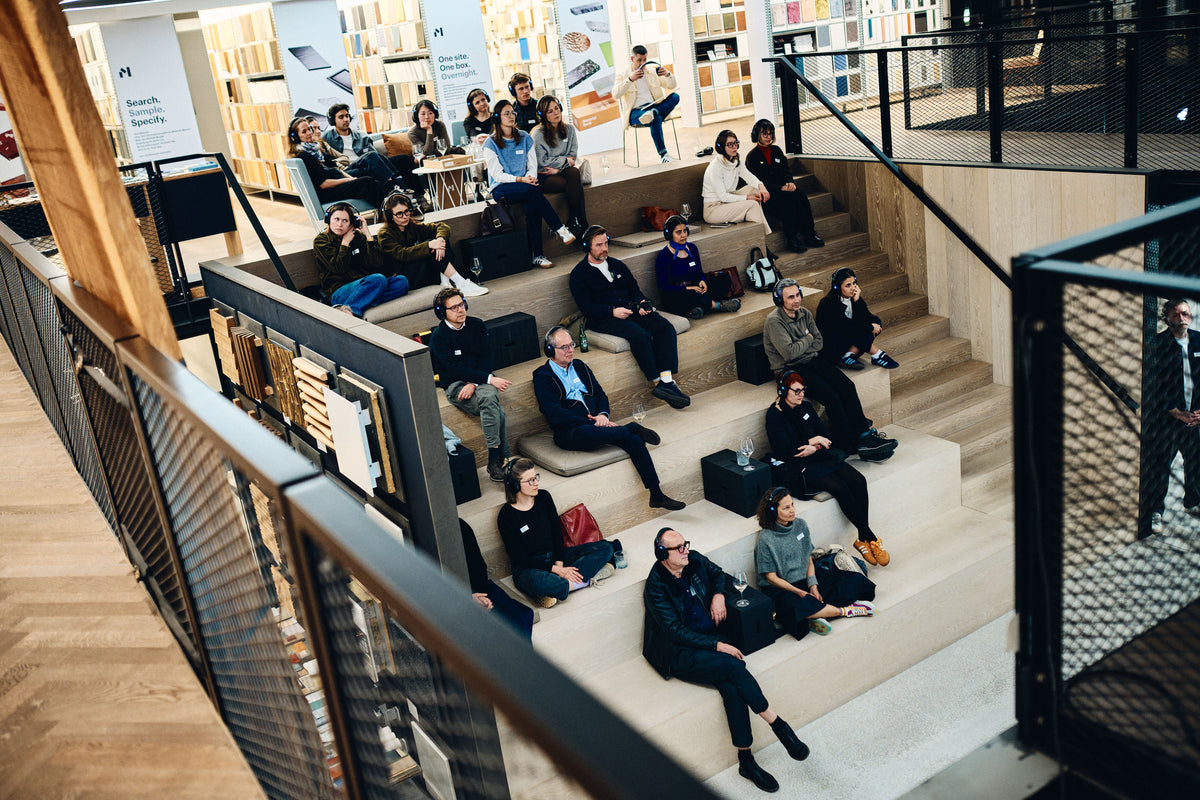
To make this tangible, we developed Chocolate Frequencies, a workshop experience created together with a group of selected architects to explore how sound and frequency change the way we taste. We are glad to share the curated set-list composed for this exploration.
As the pitch begins to rise, a delicate sweetness surfaces, the cacao softening, lifted by the higher frequencies into something brighter and almost floral.
Let the tone descend and the chocolate turns inward: bitterness deepens, tightening into a firm, tannic structure that lingers long after the last note fades.
Taste, it turns out, is tuned as much by the ear as by the tongue.
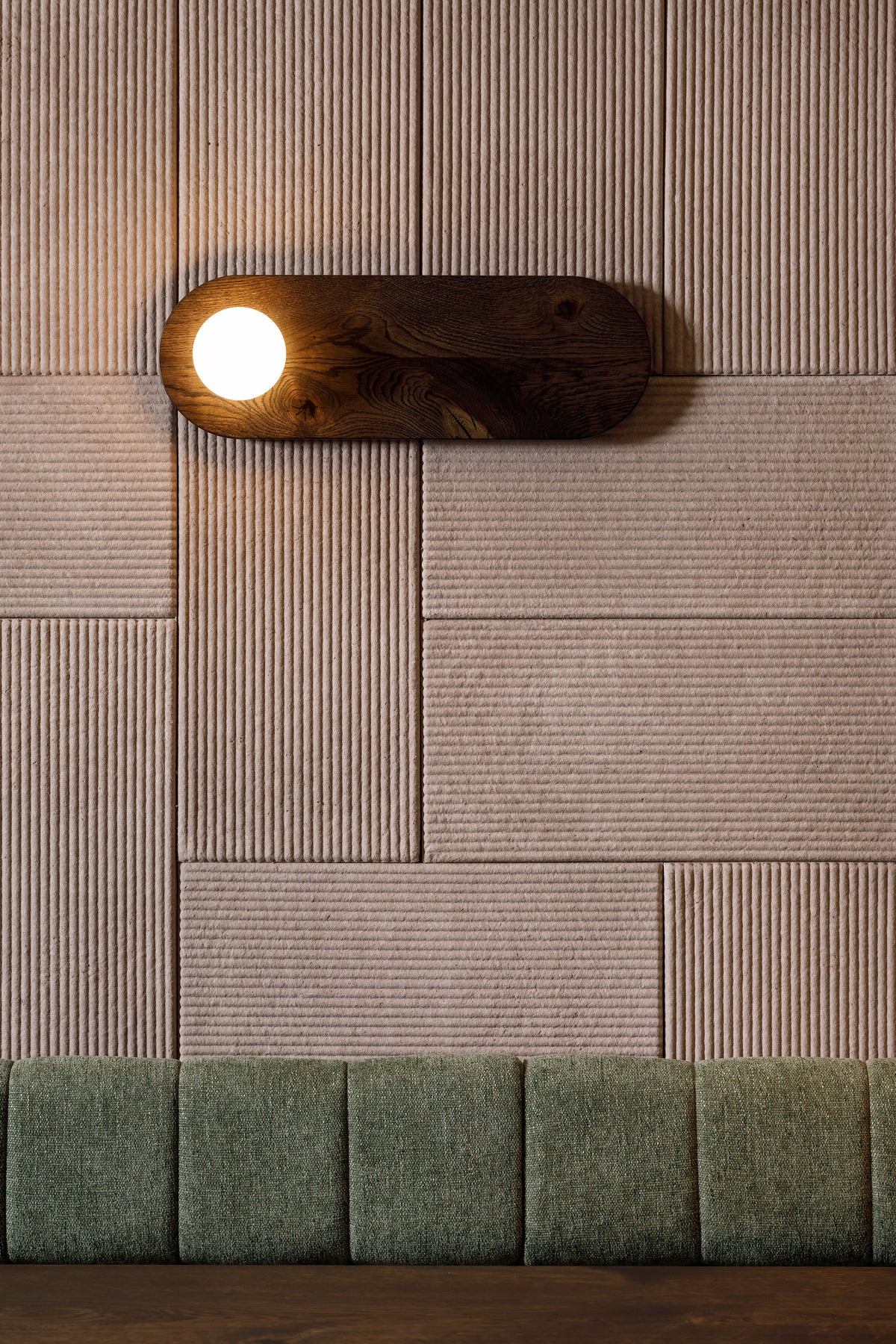
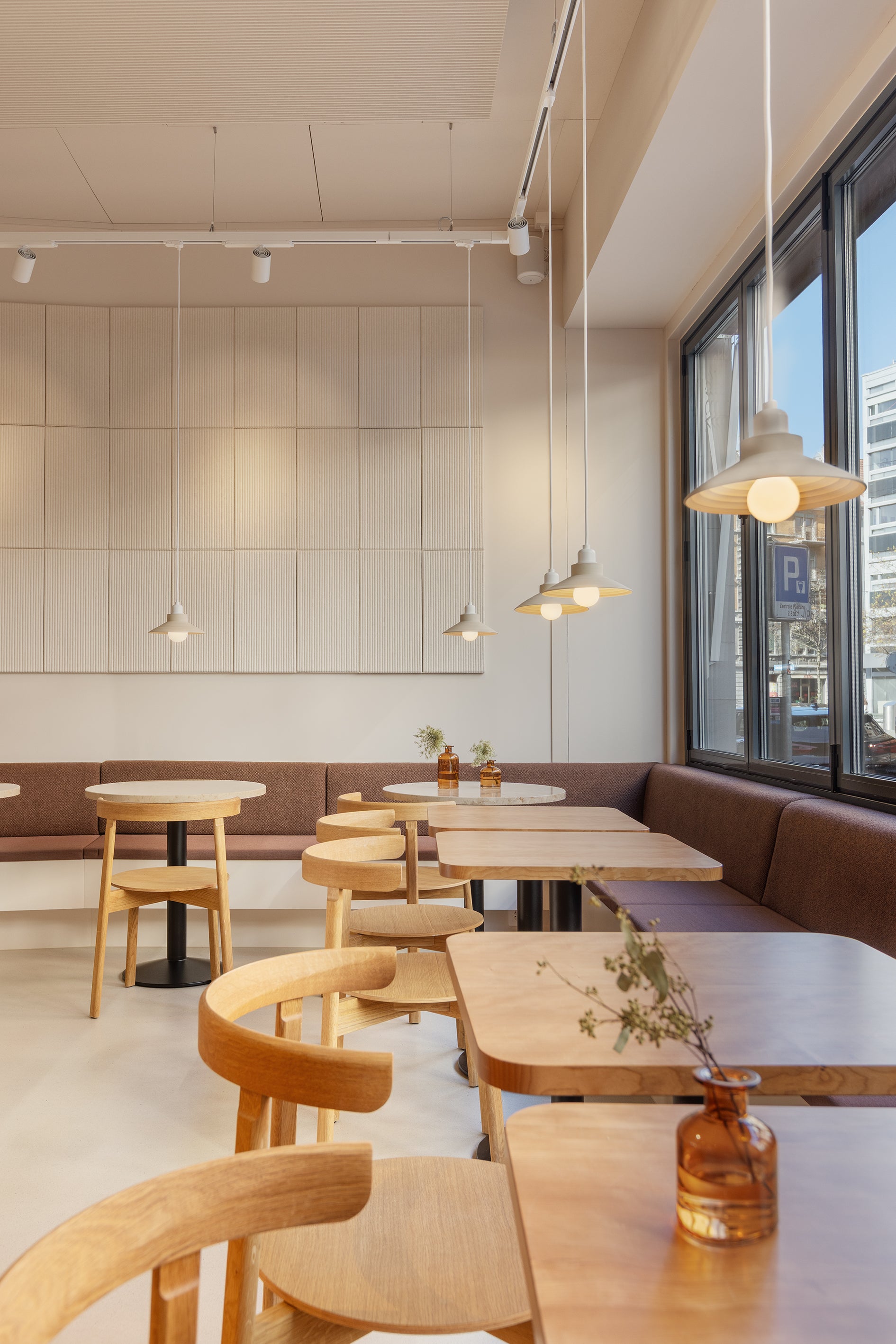
Restaurants, hotels, bars and event spaces are composed through material, light, layout and service. Sound is present in every one of those decisions, yet it often receives attention only after the visual concept has been settled.
Uncontrolled background noise can reduce perceived sweetness and make flavour harder to attend to. Reverberation also affects how easily guests can converse and how comfortable a space remains over time.
The aim is not silence, but it is an acoustic setting that supports the intended pace and character of the room. When sound is considered from the outset, food, atmosphere and social interaction are less likely to work against one another.
Sonic seasoning makes a broader design principle tangible: hospitality is experienced by the eyes, ears and palate at the same time.
Chocolate Frequencies turns that principle into a simple experiment. It asks designers to treat acoustics not as a corrective layer, but as one of the conditions through which guests perceive a space – and what they taste within it.
Good hospitality design does not isolate the senses, it composes for them together.